
What a head type is, and why it matters
A spray head throws a fixed fan a short distance and uses a lot of water at once. A rotor throws a moving stream farther and uses less at a given moment. Drip wets soil slowly at the root.
Those three do not drink at the same speed. A zone is a group of heads that must finish together. If they cannot, the lawn will show it.

How heads share a valve
The valve does not know what is downstream. It only opens. The design has to put like with like, or the precipitation rate splits and dry edges appear.
 Spray
 Rotor
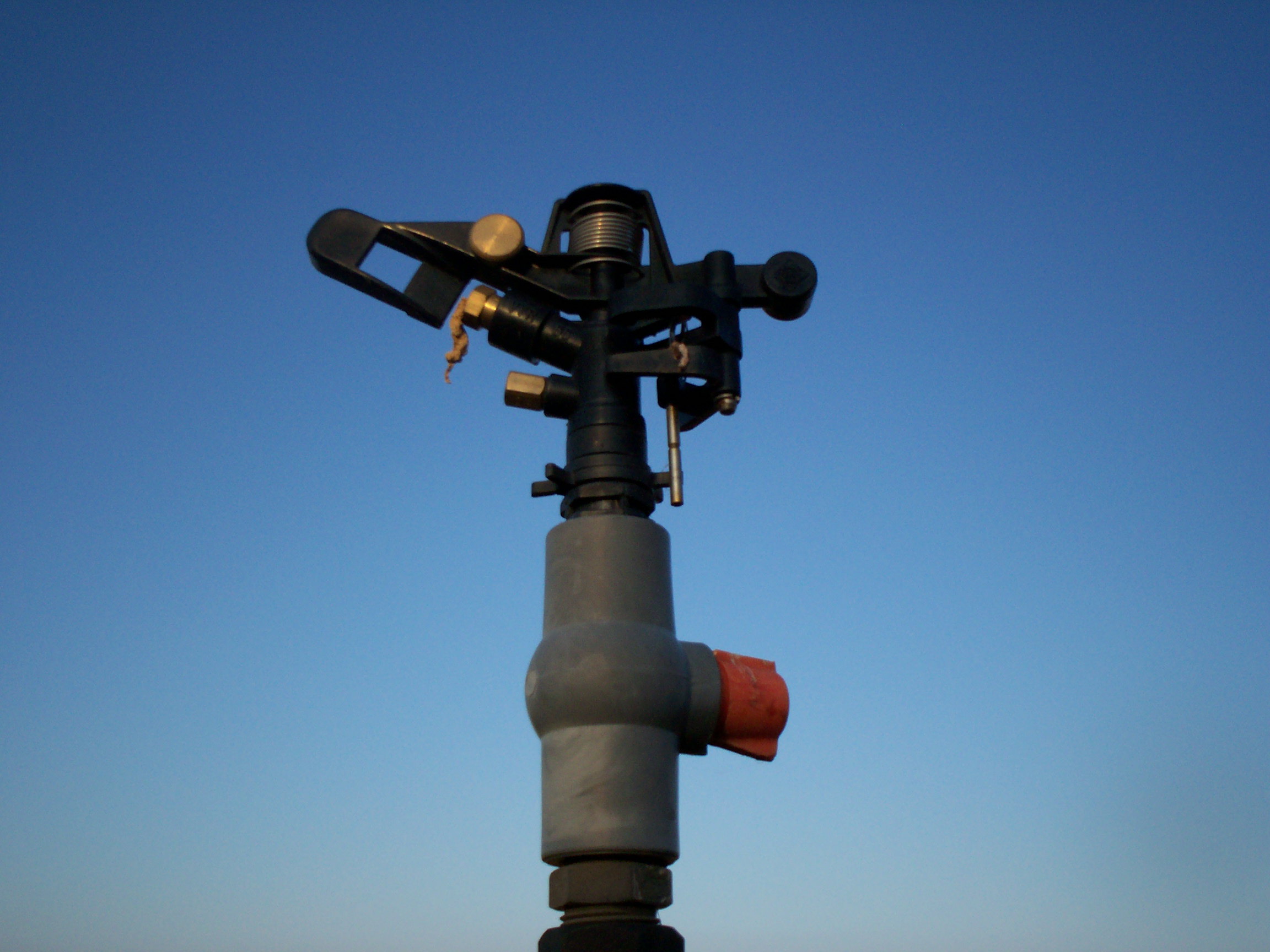
 Impact
How fast each head puts water down
A spray can dump two to four times faster than a rotor. Put them on one valve and the spray soaks while the rotor is still thirsty.
How mixing shows up
Homeowners often add a spray to a rotor zone to hit a dry corner. The new head can steal the flow. The rotors then come up short, and the corner still looks wrong.
Spray on a rotor zone
The spray soaks its circle. The rotors lose pressure and leave a ring.
Matched rotors
Each head throws a similar stream. Overlap is even. This is the goal.
Bed on a lawn zone
Shrubs sit wet. Turf next to them stays thirsty, or the other way around.
What you are seeing on the lawn
A dark circle around one head and a pale ring beyond it often means two head types are sharing water they cannot share.
Changing the nozzle chart can help when the family is the same. It will not make a spray behave like a rotor.
Common problems
Head-type trouble looks like pressure trouble. It is usually a design mix.
A dry corner after a renovation
A new bed or walk cut a rotor's throw. A spray was added on the same valve as a quick fix.
One head doing two jobs
A rotor aimed at both lawn and driveway wastes water and still leaves a strip dry.
Nozzles from two brands on one zone
Flows do not match. One head roars. The next one whispers.
A drip line teed into a spray zone
The drip wants hours. The sprays want minutes. Someone loses.

What to look for
Stand at the valve box and watch one zone from the patio.
- Do all heads throw the same kind of stream?
- Is one head a fan and the next a rotating jet?
- Did a dry corner appear after a new walk or bed?
- Are bed plants on the same start time as the lawn?
- Was a head added without changing the rest of the zone?
Customer tips
Small observations tell you whether the zone was designed, or patched.
Do not add a head on a guess
An extra spray on a busy rotor zone can drop the whole run out of range.
Match the family first
If you replace a broken head, match the type and the nozzle, not just the brand colour.
Give beds their own valve
Shrubs and turf almost never want the same minutes.
When to consider a split
If sprays and rotors already share a valve, splitting the zone is cleaner than living with a dry ring.
When to call a professional
Call after a landscape change, or when one head soaks and its neighbour cannot reach. That is a layout question.
Key takeaways
- A zone is a group of heads that must finish together.
- Spray, rotor, and drip do not apply water at the same speed.
- Adding one unmatched head can starve the rest of the zone.
- Beds and turf almost never belong on the same valve.
- Match the family before you change the clock.