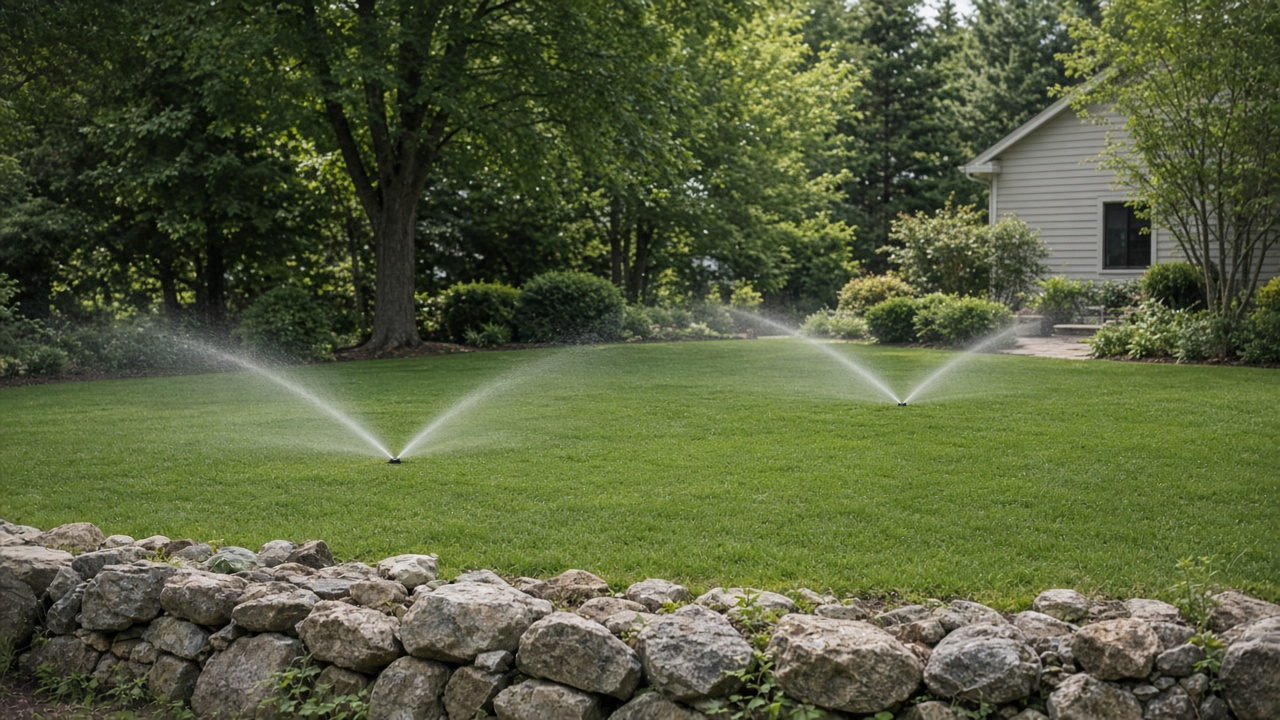
What pressure is, and why it matters
A sprinkler system is a set of pipes and heads that share one supply of water. Pressure is the force behind that water. Volume is how much water is available. You need both.
Spray heads are often happiest around 30 psi. Rotors usually want more, often in the 30 to 50 psi range. City water at the tap can sit anywhere from the 40s to well above 80. The number at the tap is not the number at the last head on the zone.
How pressure moves through a system
Every step from the street to the grass uses some of that force. A design that looks fine on paper can still run short if the zone asks for more than the supply can give.
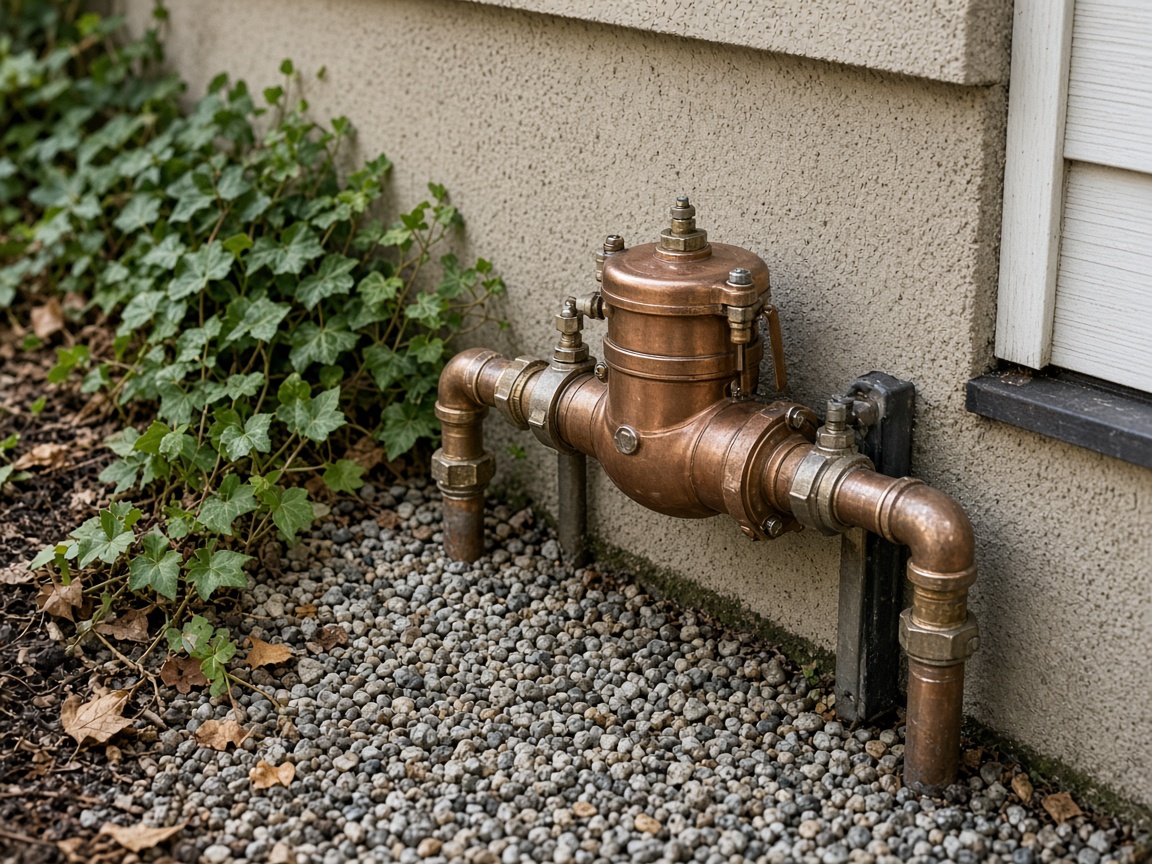 Street to the lot
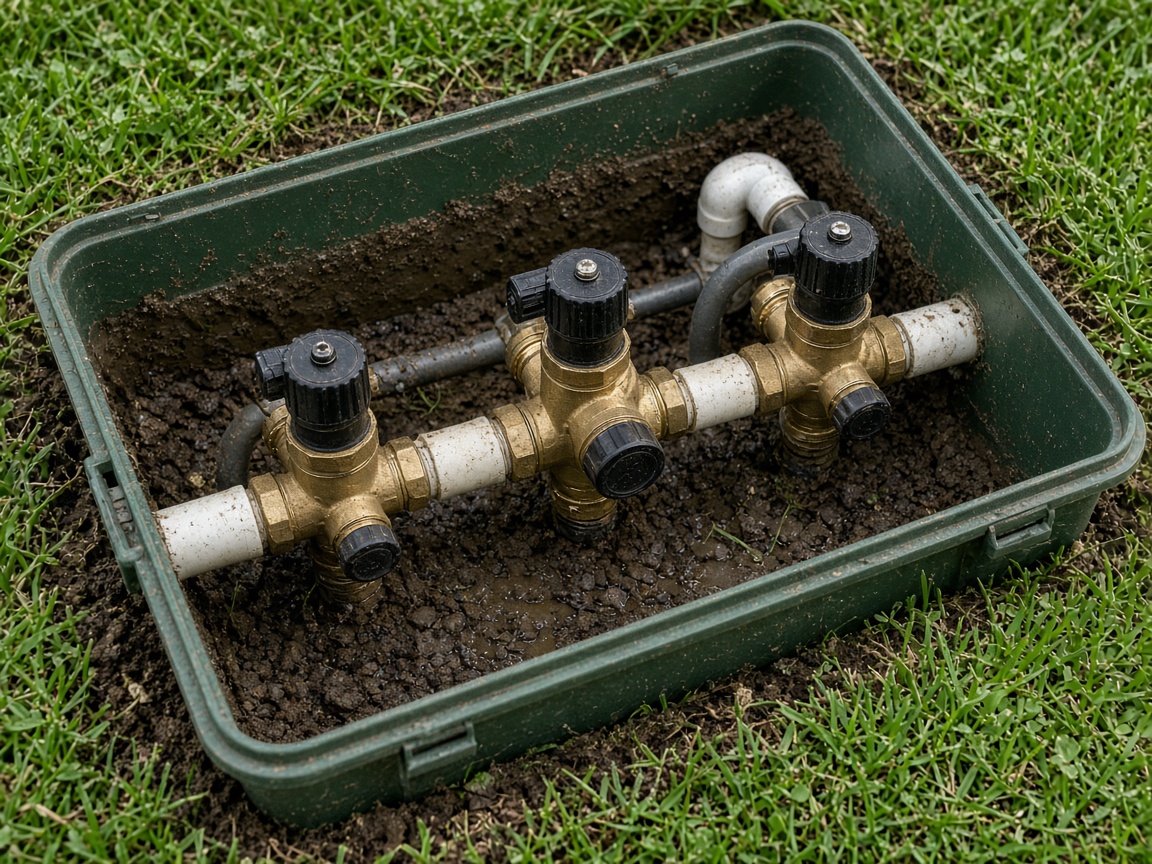 Valves and pipe
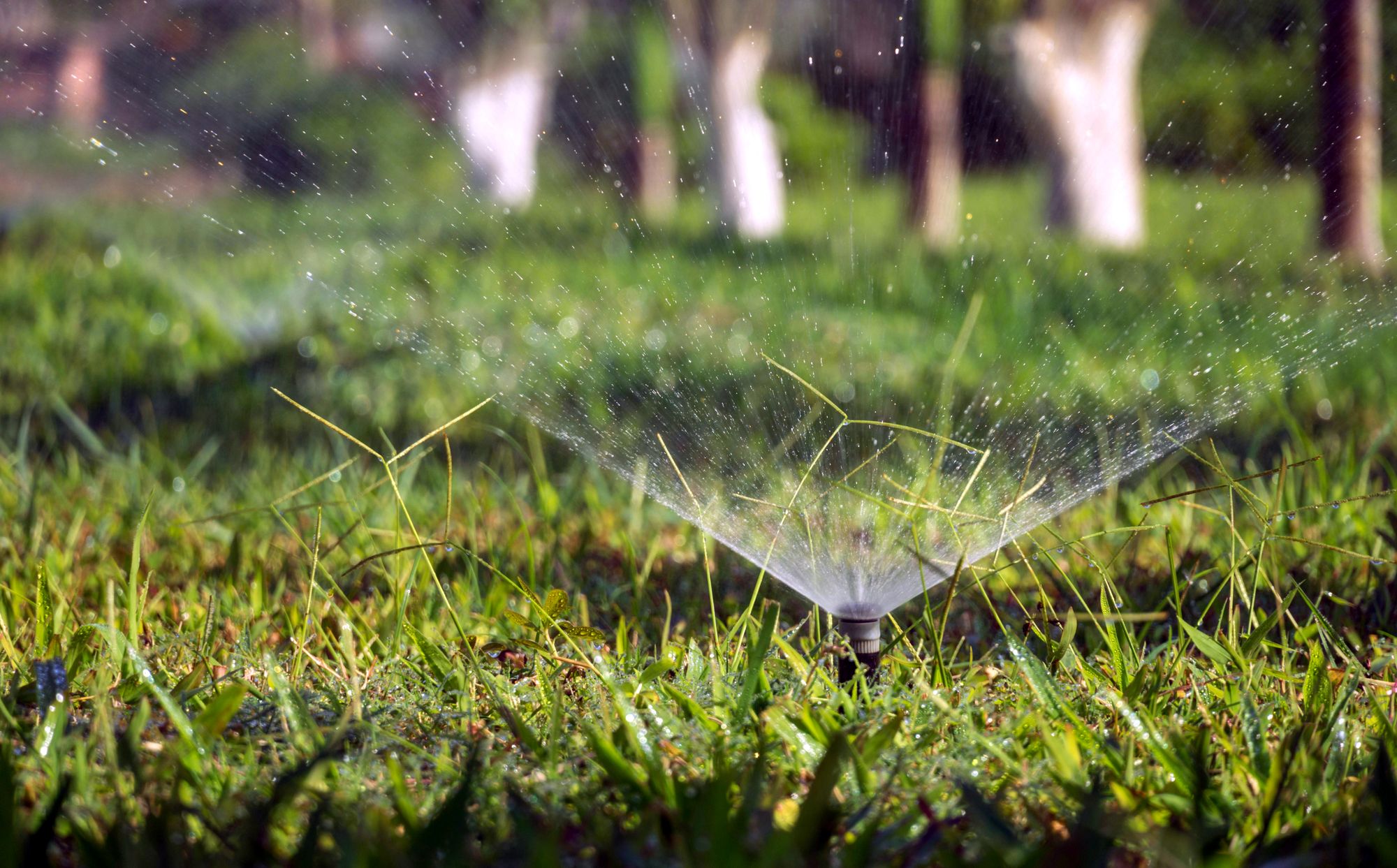 The last head
Working pressure, not city pressure
Heads are built for a band. Below it the radius dies. Above it the stream turns to mist.
How it affects coverage
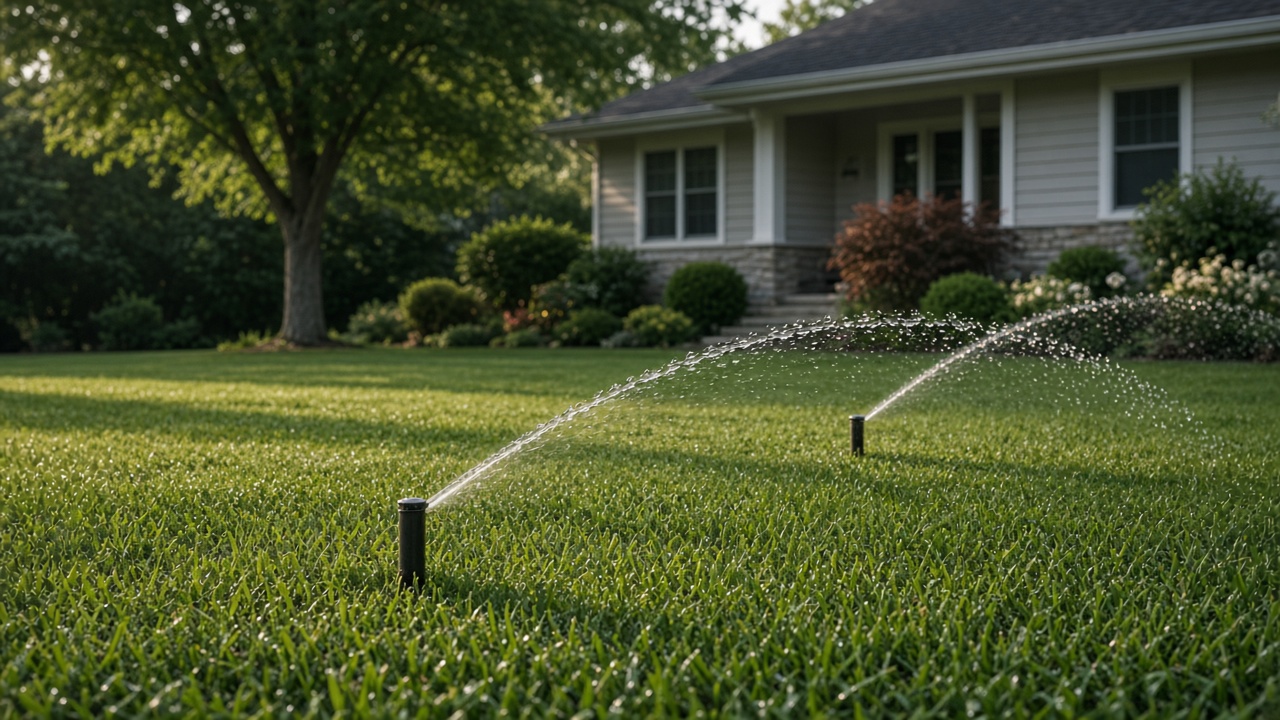
Heads are built for a working range. Below that range, the radius shrinks and the head may not pop up. Above it, the stream breaks into fog. Wind then carries the water onto the sidewalk instead of the turf.
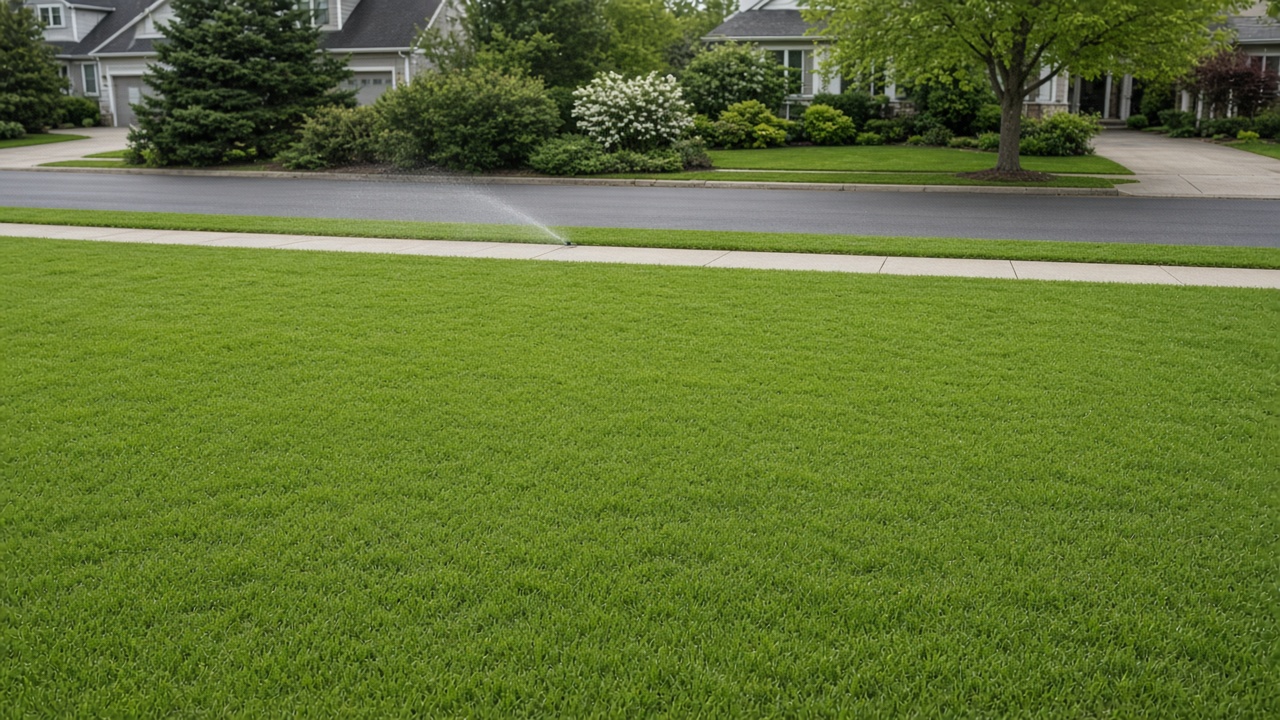
Too low
Short throw. Dry edges. Heads that sit half up. Adding minutes on the timer will not fix a zone that never reaches.

In range
Streams hold together. Neighbouring heads overlap. The lawn drinks, and the walkway stays mostly dry.
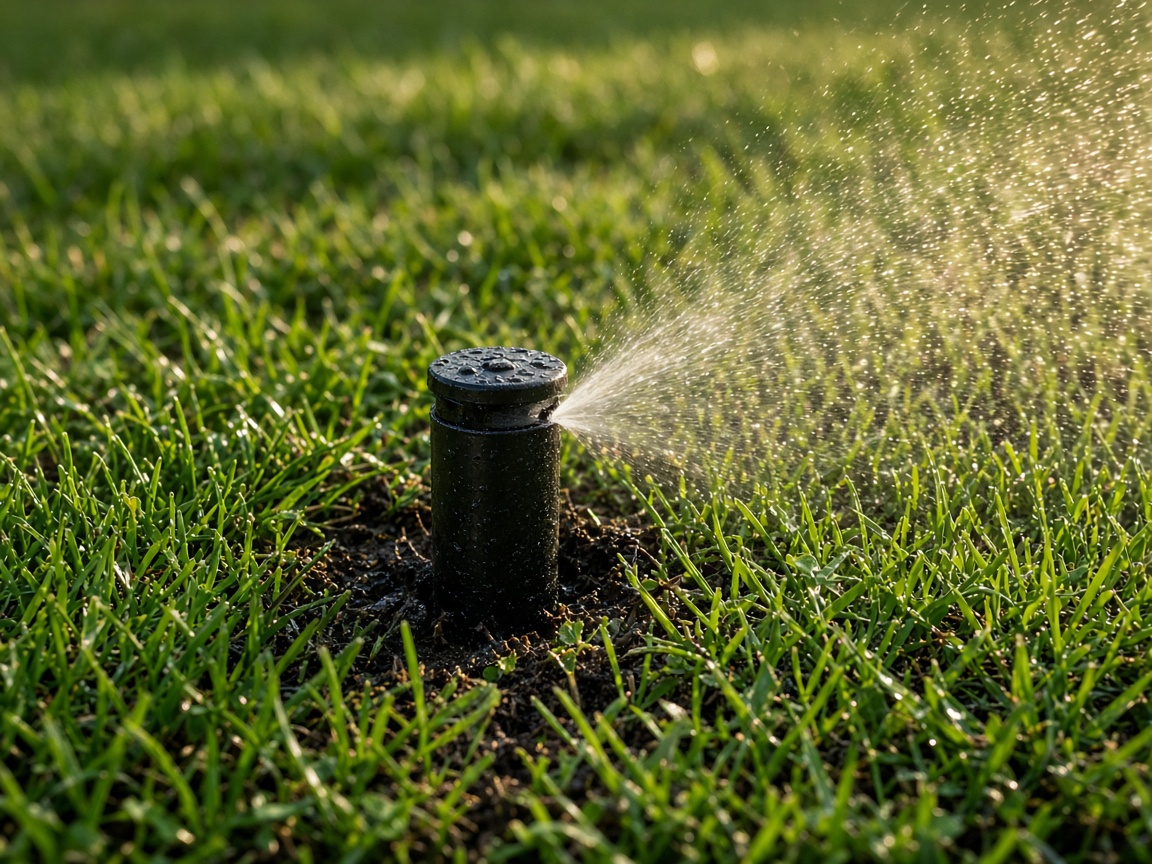
Too high
Water turns to mist, then blows away. You can water longer and still have dry spots, plus a higher bill.
What you are seeing on the lawn
A dry strip along a fence is often a head that never reached. A wet driveway with thirsty grass beside it is often mist. Both can look like “the system is weak.” They are opposite problems.
This is why turning the station up by five minutes is a poor first move. You may be watering fog, or watering a zone that was already soaked in the middle.
Common problems
Pressure trouble rarely announces itself as a number. It shows up as a pattern on the property.
One strong zone, one weak zone
The supply is shared. A zone with too many heads, or pipe that is too small, starves the last sprinklers while the first ones look fine.
Heads that will not pop up
Low pressure, a clogged filter, or a heavy cap of turf can hold a head down. The rest of the zone then throws over a head that never opened.
Fog on a windy morning
High pressure breaks the stream. The water never lands where the nozzle was aimed. You pay for water that left the lot.
Runoff on a slope
If the soil cannot take the water as fast as the heads put it down, it sheets off. Cycle-and-soak helps, but pressure still has to be in range first.
What to look for
You do not need a gauge to start. Watch one zone at dawn, when the air is still.
- Do neighbouring streams overlap, or is there a dry gap?
- Does the spray look like a clear arc, or like fog?
- Do all heads in the zone stand up at the same time?
- Is the walkway wet while the far corner stays pale?
- Did someone add heads to a zone that used to work?
Customer tips
Small checks at home tell you whether this is a timer question or a pressure question.
Watch, then change the clock
Look at the pattern first. If the water is not landing on the grass, more minutes will not grow the dry edge back.
Do not add heads on a guess
An extra head on a busy zone can drop the whole run below its working range. The new head can make the old ones worse.
Note the time of day
City pressure can sag when many houses water at once. A zone that looks weak at 7 p.m. may run clean at 5 a.m.
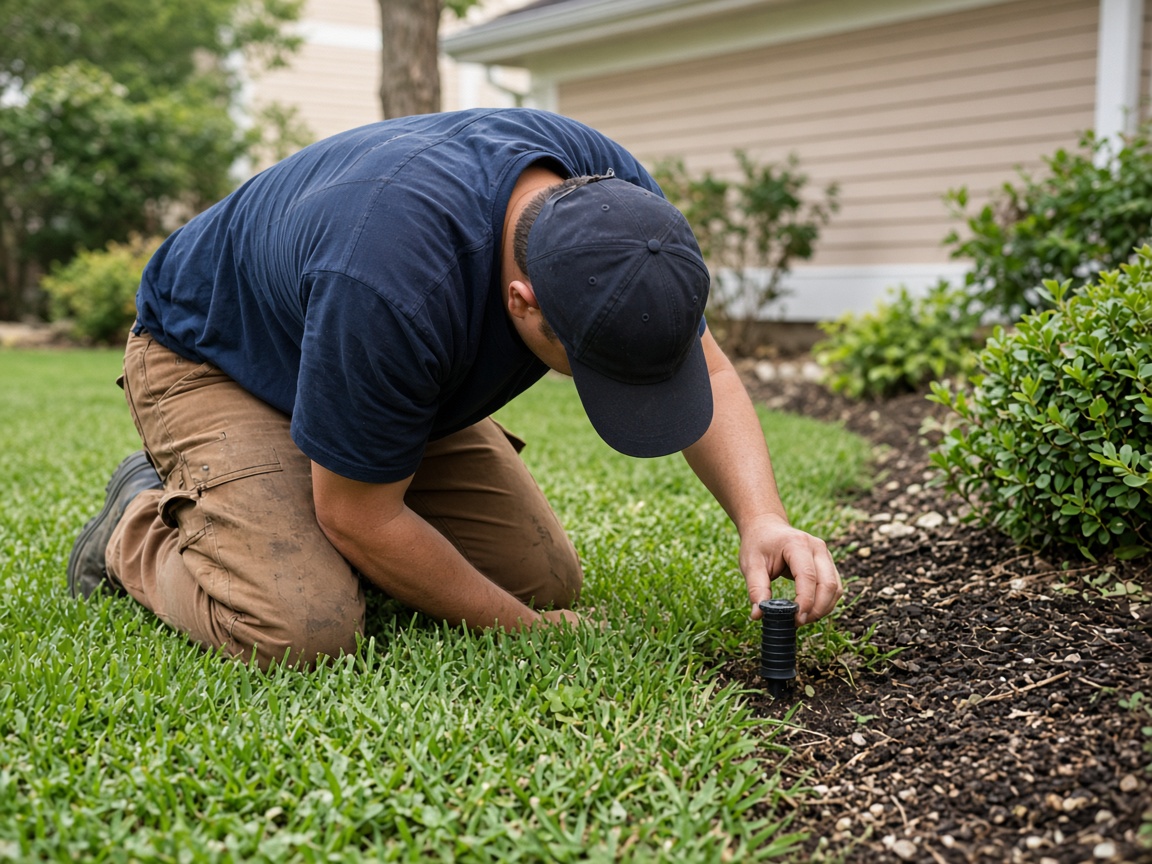
When to consider an upgrade
Pressure-regulating heads or a valve-level regulator can tame a supply that is simply too strong. A booster only helps when the supply is actually low. The wrong upgrade wastes money and can make misting worse.
When to call a professional
Call when more than one zone is uneven, when heads mist in still air, or after a renovation that added heads. A crew can measure at the tap and at the last head, then decide if the fix is a nozzle, a regulator, or a zone that needs to be split.
Key takeaways
- Pressure is force. Flow is volume. Coverage needs both in range.
- The tap reading is not the reading at the last sprinkler.
- Dry edges often mean too little force. Fog often means too much.
- More minutes on the timer will not repair a zone that cannot reach.
- Measure before you add heads, a booster, or a new regulator.